
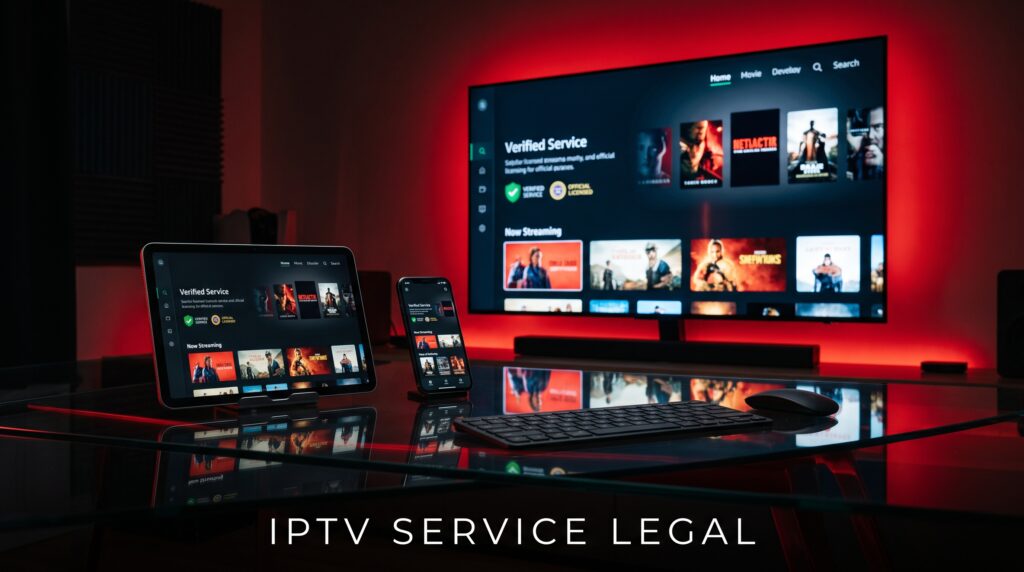
Summary: An IPTV (Internet Protocol Television) service delivers television content over IP networks rather than traditional satellite or cable formats. The baseline technology is 100% legal. However, the iptv service legal status of a specific provider depends entirely on whether they hold the proper copyright licenses to broadcast the networks, movies, and shows they offer to consumers.
If you are cutting the cord this year, you are likely navigating a complex and crowded market of modern streaming options. One of the most common questions consumers ask is how to ensure their chosen digital platform operates entirely within the strict boundaries of United States copyright law. Understanding the iptv service legal landscape is critical before you hand over your credit card information or install third-party applications on your home network. In this comprehensive, expert-level guide, we will break down exactly what makes a streaming platform compliant, how to spot dangerous red flags, and how to protect your digital privacy in 2026.
[Rank Math TOC Placeholder]
Internet Protocol Television is simply a delivery mechanism, much like a fiber-optic cable or a satellite dish. Just as a physical DVD player is a legal piece of hardware, the underlying technology behind streaming live television over the internet is completely legitimate. Major telecommunications companies and household brand names utilize this exact same IP technology to deliver content to millions of homes every day.
When industry experts discuss the iptv service legal framework, they are not talking about the technology itself. The technology is simply a bridge. Instead, the intense legal scrutiny falls entirely on content licensing, copyright ownership, and distribution rights.
Broadcasters, independent studios, and major networks spend billions of dollars producing, marketing, and licensing high-quality content. To legally transmit that highly regulated content directly to your living room screen, a streaming provider must pay for expensive commercial distribution rights.
If a provider successfully secures these rights, they are operating a legal business. If they capture a broadcast signal and distribute it over the open internet without paying the copyright holders, they are operating an unauthorized and illicit service.
[Image 1 Placeholder – Alt Text: A high-tech digital streaming interface illustrating the iptv service legal delivery mechanism across smart TVs, smartphones, and tablets.]
The absolute easiest way to understand your streaming options in today’s saturated market is to divide the available providers into two distinct categories: verified services and unverified services. Knowing the crucial difference between these two is the foundational step in ensuring your iptv service legal compliance.
Verified providers are typically established media corporations that have negotiated complex, highly regulated contracts with global media conglomerates. These services are usually household names, easily found on major advertising networks, and thoroughly vetted by regulatory bodies.
When you use a verified provider, you rarely have to question the iptv service legal standing of the platform. They operate with total transparency, charge standard market subscription rates, and offer dedicated customer support channels. You can download their official applications directly from the Apple App Store, Google Play Store, or the Roku Channel Store without ever needing to “jailbreak” or modify your expensive streaming hardware.
Unverified services, on the other hand, operate in a murky legal gray area or outright violate federal and international copyright laws. These fly-by-night providers often boast thousands of premium cable channels, lucrative international sports packages, and high-priced pay-per-view events for a tiny fraction of the cost of a verified provider.
While the exceptionally low price tag is certainly tempting for budget-conscious consumers, the iptv service legal risks associated with these platforms are quite severe. Common red flags include requesting payment exclusively in untraceable cryptocurrency, requiring you to “sideload” questionable applications onto your device, or lacking any verifiable corporate contact information.
If a subscription deal seems vastly too good to be true—such as offering every global sports package for just $10 a month—it is highly likely the provider does not hold the legally required broadcasting licenses.
To truly understand how the streaming industry functions behind the scenes, you need to look at the legal mechanisms that govern digital broadcasting. The distinction between a legitimate operation and a pirate network comes down to paperwork, compliance, and geographical boundaries.
Transparency is the absolute hallmark of a legal streaming operation. Legitimate IPTV providers will openly advertise their official partnerships with major networks, premium movie channels, and local broadcast affiliates. They proudly display their terms of service, acceptable use policies, and comprehensive privacy guidelines on their corporate websites.
If a streaming provider’s website consists of nothing more than a generic payment portal and a sprawling list of premium channels without any corporate branding or copyright information, you must immediately question their iptv service legal standing. Legitimate operations have large overhead costs precisely because they pay for the rights to the content they broadcast.
To explore what a professional, reliable streaming interface looks like, you can visit our Home page to see a properly structured digital platform.
Another massive component of an iptv service legal platform is its adherence to the Digital Millennium Copyright Act (DMCA). The DMCA is the primary piece of legislation in the United States that governs digital intellectual property. Legitimate streaming services have dedicated legal departments designed to comply with DMCA takedown notices and copyright audits.
Furthermore, legitimate streaming services strictly enforce geographical blackouts. When a network purchases the rights to broadcast a specific sports game or movie, those rights are often restricted to a specific country or region. A legitimate provider will use IP tracking to ensure they are not broadcasting content outside of their legally permitted zones. If a service promises you restriction-free global streaming with zero blackouts, they are likely ignoring copyright laws entirely.
[Image 2 Placeholder – Alt Text: A conceptual visual of digital copyright law documents and DMCA compliance notices highlighting the importance of iptv service legal standards.]
The digital media landscape has fractured dramatically over the last few years. A decade ago, consumers relied on a single, predictable cable subscription. Today, premium content is scattered across dozens of standalone, expensive applications, leading to widespread “subscription fatigue.”
This growing consumer frustration has driven millions of US viewers to search for consolidated alternatives. As a direct result, regulatory bodies and copyright holders have cracked down aggressively on unauthorized broadcasting networks.
Organizations like the Federal Communications Commission (FCC) and major media anti-piracy coalitions are actively working round-the-clock to track down and shut down illicit server networks. When you proactively search for an iptv service legal solution, you are protecting your household from being caught in the crossfire of these high-stakes legal battles.
Internet Service Providers (ISPs) in the United States actively monitor their users’ network traffic patterns. If your internet company detects that you are consistently downloading massive amounts of streaming data from a known unauthorized, unverified server, they may take immediate punitive action against your account.
This usually begins with aggressive network throttling, where your home internet speeds are intentionally slowed down to a crawl during peak evening hours, causing endless buffering. In more severe, documented cases, ISPs will forward official DMCA warning letters to your physical home address, threatening immediate account termination if the suspected copyright infringement continues.
Securing a proper iptv service legal provider ensures your ISP has absolutely no legal reason to interfere with your high-speed connection.
Perhaps the greatest, most tangible risk of ignoring basic iptv service legal standards is the immense threat to your personal cybersecurity. Unverified streaming applications that require complex sideloading intentionally bypass the official security checks implemented by Apple, Google, and Amazon.
These unvetted applications can be secretly laced with malicious code designed to aggressively scrape your personal data, steal sensitive login credentials, or hijack your smart TV’s processing power for botnets. When you operate outside of the established iptv service legal ecosystem, you forfeit all basic consumer protections.
Furthermore, handing your primary credit card information over to an anonymous, offshore entity leaves you incredibly vulnerable to devastating identity theft and massive unauthorized financial charges.
[Image 3 Placeholder – Alt Text: A computer screen displaying an ISP warning notice alongside a malware alert, emphasizing the cybersecurity risks of ignoring iptv service legal protocols.]
Protecting yourself and your family requires a bit of proactive due diligence. Before officially subscribing to any new digital streaming platform, you should run through a comprehensive checklist to verify its legitimacy and safety.
Take a close look at how the provider handles financial transactions. A reputable, iptv service legal company will use standard, highly secure payment processors like Visa, Mastercard, or PayPal. They will provide a clear, itemized receipt for your subscription and offer transparent cancellation policies.
If a provider forces you to pay using Bitcoin, untraceable gift cards, or obscure third-party transfer apps, you should walk away immediately. Legitimate businesses want to make paying for their service as standard and transparent as possible.
If you are looking to understand how legitimate pricing structures work without hidden fees, you can review our standard Pricing plans, which demonstrate clear, transparent subscription tiers.
Tech giants have incredibly strict quality control measures for their respective digital storefronts. They routinely and aggressively sweep their platforms for applications that facilitate any form of copyright infringement.
If you can easily download the provider’s application directly from your smart TV’s official, built-in store, it is a very strong indicator that the iptv service legal requirements have been fully met. If the provider requires you to dive into your device’s hidden developer settings to install an unknown APK file from a random web browser, you are stepping into highly risky territory.
Many modern streaming consumers use Virtual Private Networks (VPNs) to protect their privacy and digital footprint online. A high-quality VPN encrypts your entire internet traffic, effectively preventing your ISP, government agencies, and other third parties from monitoring your daily digital activities.
Organizations like the Electronic Frontier Foundation (EFF) advocate strongly for digital privacy, widespread encryption, and protecting consumer rights in the digital age.
While a VPN is an incredibly excellent tool for protecting your sensitive data on public Wi-Fi networks or preventing aggressive ISP throttling, it is vitally important to note that a VPN does not magically change an unauthorized iptv service legal status into a legal one.
Using a VPN merely obscures your activity from immediate view. The act of consuming illegally distributed, copyrighted content remains a violation of the law regardless of whether your IP address is hidden. You should always prioritize finding a legitimately licensed provider first, rather than relying on a VPN to hide engagement with pirate networks.
The battle over streaming rights is not just a domestic issue within the United States; it is a massive, coordinated global effort. Copyright holders are increasingly pooling their vast resources to form international anti-piracy coalitions.
These powerful organizations work directly with global law enforcement agencies to raid massive server farms, seize domain names, and arrest the operators of illicit streaming syndicates. Because of this aggressive global enforcement, unverified streaming services are notoriously unstable.
An unauthorized service you pay for today could easily be shut down and taken offline by authorities tomorrow, leaving you with no service and absolutely no way to get a refund. Sticking to an iptv service legal option guarantees the longevity and stability of your home entertainment setup.
[Image 4 Placeholder – Alt Text: A global map with digital nodes showcasing the international enforcement of broadcasting laws and iptv service legal compliance worldwide.]
When you are finally ready to commit to a digital streaming platform, it is important to evaluate their technical offerings carefully. Look for modern providers that offer crystal-clear, transparent pricing tiers without any hidden activation fees or surprise cancellation charges.
A highly reliable iptv service legal operation will almost always provide a seamless, intuitive user experience, stunning 4K and high-definition streaming without constant buffering, and broad compatibility across multiple hardware devices, including smartphones, smart TVs, gaming consoles, and desktop computers.
They will never ask for payment in shady, untraceable methods, and they will always provide crystal-clear instructions on how to use their proprietary service safely.
If you are currently exploring your vast options and want to experience a high-quality streaming interface firsthand, it is highly recommended by industry experts to test a platform extensively before committing to a long-term annual contract.
Taking advantage of short-term, low-commitment trials is the absolute best way to evaluate live channel quality, server stability during peak hours, and the responsiveness of the electronic program guide (EPG). We highly recommend securing a 24h trial to personally test the server quality and ensure the interface meets your strict home entertainment standards before making a final decision.
Using the underlying protocol and technology itself is perfectly legal. However, streaming copyrighted content from an unlicensed, unverified provider violates civil and sometimes criminal copyright law. While federal law enforcement primarily targets the large-scale distributors and server operators rather than individual home viewers, users of illicit services still face significant personal risks, including ISP throttling, service termination, and DMCA legal warnings.
A verified, properly licensed streaming provider will typically have their official application readily available in major, regulated app stores (like Roku, Amazon Fire, or Apple TV). They will charge standard market subscription rates, accept traditional credit cards, and openly display their corporate headquarters information, privacy policies, and terms of service. If a service requires complex sideloading and offers thousands of premium cable channels for just a few dollars a month, it is almost certainly an unlicensed operation.
No, it does not. A Virtual Private Network (VPN) simply encrypts your local internet traffic and hides your actual IP address, effectively protecting your digital privacy from your immediate ISP. However, it does not alter the underlying iptv service legal status of the media you are consuming. Copyright infringement remains illegal regardless of whether your internet traffic is encrypted and hidden from view.
Navigating the incredibly fast-paced world of internet television streaming doesn’t have to be overwhelming or inherently risky. By taking the time to understand the core concepts of content licensing, recognizing the glaring red flags of unauthorized providers, and prioritizing your household’s digital cybersecurity, you can effortlessly build a home entertainment setup that is both incredibly robust and completely secure.
Remember, while the underlying streaming technology is undeniably brilliant and represents the future of television, the iptv service legal status of your chosen digital provider ultimately dictates your ongoing safety and viewing stability. Always look for total corporate transparency, official app store support, and highly clear, understandable pricing structures. Do not compromise your sensitive personal data or risk harsh ISP retaliation for the sake of saving a few negligible dollars a month on unauthorized platforms.
Ready to experience premium, reliable, and buffer-free streaming with a truly seamless user interface? Take the logical next step and see the incredible difference for yourself. Grab your 24h trial today to properly test out the robust server quality, or take a moment to explore our flexible Pricing plans to find a custom package that perfectly fits your exact entertainment needs and budget.
67iptv © 2026 all rights reserved
WhatsApp us