
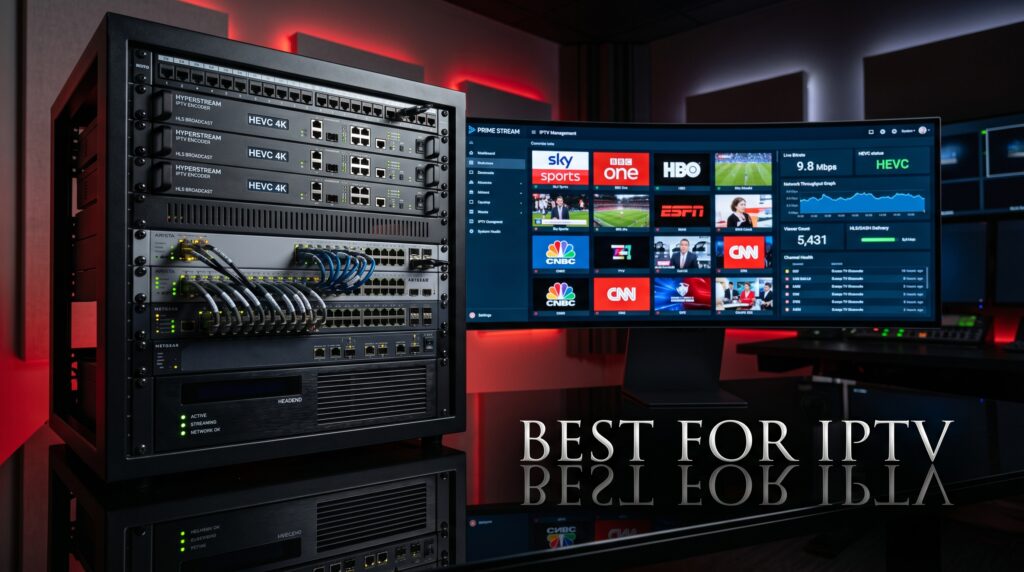
Snippet Summary: When determining what is best for iptv, you must consider a synergy of three core elements: a high-performance streaming device (like the NVIDIA Shield TV Pro), an optimized software player (like TiviMate), and a robust, low-latency internet connection. Combining these elements ensures a seamless, buffer-free, high-definition television experience that outperforms traditional cable.
The cord-cutting revolution in the United States has completely transformed how we consume digital media. Millions of households are abandoning expensive, traditional cable subscriptions in favor of flexible, internet-based broadcasting.
However, transitioning to an internet-based television protocol can sometimes feel overwhelming. With thousands of hardware and software options flooding the market, consumers frequently ask one critical question: what is truly the best for iptv?
Building the ultimate home entertainment system requires more than just buying a random streaming stick. It demands an understanding of processing power, network stability, and software compatibility.
In this comprehensive, expert-level guide, we will break down every single component required to build a flawless streaming setup. From premium hardware to router configurations, we will show you exactly what it takes to eliminate buffering forever.
For a look at top-tier streaming services that pair perfectly with high-end setups, visit our Home Page.
The foundation of any great streaming experience begins with the physical hardware plugged into your television. Your streaming device is the engine of your entertainment system.
If you use an underpowered device, you will inevitably experience lagging menus, slow channel zapping, and frustrating crashes. To determine what hardware is best for iptv, we must look at processing power, RAM, and thermal management.
Streaming live television requires continuous, heavy data processing. Unlike Netflix, which pre-loads (buffers) a movie in advance, live TV is processed in real-time.
Therefore, a device with a minimum of 2GB to 3GB of RAM and a quad-core processor is highly recommended. Let’s look at the top contenders dominating the market right now.
When industry experts discuss what is the absolute best for iptv, the NVIDIA Shield TV Pro is always at the top of the list. Released to critical acclaim and powered by the Tegra X1+ processor, this device is an absolute powerhouse.
What makes the Shield incredibly unique is its AI-enhanced upscaling technology. Many live TV broadcasts natively stream in 720p or 1080p. The Shield uses artificial intelligence to upscale this video to crisp 4k resolution in real-time.
Furthermore, it boasts 3GB of RAM and Gigabit Ethernet connectivity. This ensures that massive Electronic Program Guides (EPGs) load instantly without crashing your device.
You can read a detailed technical review of the NVIDIA Shield’s processing capabilities on TechRadar’s official hardware review page.
If you are looking for an affordable entry point, the Amazon Fire TV Stick 4K Max is arguably the best for iptv on a budget. Amazon recently upgraded this flagship stick to include Wi-Fi 6 support.
Wi-Fi 6 is a game-changer for streaming because it handles network congestion significantly better than older Wi-Fi standards. If you live in a crowded apartment building with overlapping Wi-Fi signals, this stick will maintain a stable connection.
It also features a 1.8GHz quad-core processor and 2GB of RAM. While it isn’t as powerful as the Shield, it is more than capable of running modern streaming applications smoothly.
For users who want a device exclusively dedicated to live TV, the Formuler Z11 Pro Max is widely considered the best for iptv purists. Unlike mainstream Android boxes, Formuler devices are built specifically for internet television.
The standout feature of the Formuler is its proprietary MYTVOnline 3 application. This built-in software seamlessly integrates live TV, Video on Demand (VOD), and TV Series into one beautiful, cable-like interface.
It also includes advanced features like picture-in-picture, background recording, and a physical remote control designed specifically for channel surfing.
Once you have secured the right hardware, your next crucial step is selecting the right software player. Even the most powerful hardware will struggle if you use a poorly coded, outdated application.
The application you choose dictates your user interface, how your channel guide looks, and how fast you can switch between broadcasts. Let’s explore which software is the best for iptv in today’s market.
If you are using an Android-based device (like the Shield or Firestick), TiviMate is universally recognized as the premium choice. Many enthusiasts boldly claim it is the single best for iptv application ever developed.
TiviMate offers a sleek, modern interface that rivals traditional premium cable boxes. It handles massive playlists with thousands of channels effortlessly, without suffering from interface lag.
Key features of TiviMate include:
Multi-view capabilities (watching up to 4 screens simultaneously).
Seamless catch-up TV integration for rewinding live broadcasts.
Advanced EPG customization and synchronization.
Scheduled PVR (Personal Video Recorder) functionality.
For users who need cross-platform compatibility, IPTV Smarters Pro is an incredible option. It is available on Android, iOS, Windows, Mac, and Samsung/LG Smart TVs.
This app uses the Xtream Codes API, which makes logging into your service incredibly simple. Instead of typing out a massive M3U URL, you simply enter your username, password, and portal URL.
Because of its user-friendly layout and broad device compatibility, it remains a staple for beginners trying to find what is best for iptv setup and management.
To see how easily these premium apps integrate with top-tier servers, grab our 24H Trial and test it yourself.
You can own the most expensive hardware and the sleekest software in the world, but if your internet connection is unstable, your stream will buffer. Your network is the invisible highway delivering your content.
People often assume that having “fast” internet automatically means they have the network that is best for iptv. However, for live streaming, network stability (latency and jitter) is actually more important than raw speed.
Live video compression algorithms (like H.264 and HEVC/H.265) require specific continuous data flows. Here is a baseline of what you need:
Standard Definition (SD): 5 Mbps to 10 Mbps.
High Definition (HD/1080p): 15 Mbps to 25 Mbps.
Ultra High Definition (4K): 30 Mbps to 50 Mbps minimum.
Keep in mind that these are dedicated speeds. If someone else in your house is downloading a massive video game or streaming 4K Netflix, your available bandwidth drops significantly.
For a busy household in the USA, a reliable 100 Mbps to 300 Mbps fiber optic connection is widely considered the best for iptv stability. You can test your current network latency and speed at Speedtest by Ookla.
Raw download speed dictates picture quality, but ping and jitter dictate buffering. Ping is the time it takes for a data packet to travel from the server to your house.
Jitter is the variation in that ping. If your ping constantly jumps from 20ms to 150ms, your video player won’t receive data at a consistent rate. The resulting data traffic jam causes the dreaded buffering wheel.
Fiber optic internet naturally provides the lowest ping and jitter, making it the undisputed best for iptv connection type available today.
Relying on the cheap, standard-issue modem/router combo provided by your Internet Service Provider (ISP) is a massive mistake. These generic boxes are notoriously bad at handling continuous, heavy data loads.
To achieve a flawless home entertainment setup, upgrading your networking gear is mandatory. Let’s look at why your local network configuration dictates what is best for iptv performance.
Before discussing Wi-Fi, we must state a golden rule of home networking: hardwiring is always superior. The absolute best for iptv connection is a Cat 6 Ethernet cable running directly from your router to your streaming device.
Ethernet completely eliminates wireless interference from microwaves, Bluetooth devices, and your neighbors’ routers. It guarantees zero packet loss and provides the most stable stream mathematically possible.
If running an Ethernet cable is physically impossible in your home, you must invest in a high-quality router. Look for routers supporting the Wi-Fi 6 (802.11ax) or Wi-Fi 6E standards.
These modern routers feature technologies like MU-MIMO and OFDMA. In simple terms, these features allow the router to communicate with multiple devices simultaneously without creating a data bottleneck.
Brands like Asus (specifically their RT-AX series) and Netgear Nighthawk offer robust Quality of Service (QoS) settings. QoS allows you to prioritize video streaming traffic over regular web browsing traffic. Prioritizing your streaming device at the router level is the best for iptv bandwidth management.
To explore reviews of top-tier networking equipment, visit PCMag’s guide to the best Wi-Fi routers.
In the United States, Internet Service Providers (like Comcast, Spectrum, and AT&T) actively monitor your web traffic. If they detect that you are streaming heavy amounts of video data, they will often intentionally slow down your connection.
This practice is known as “ISP Throttling.” You might have 500 Mbps internet, but your ISP artificially caps your streaming speeds at 15 Mbps, causing endless buffering on live TV.
Using a premium Virtual Private Network (VPN) is the best for iptv privacy and performance in these situations. A VPN encrypts your internet traffic, hiding your activities from your ISP.
When your ISP cannot see what kind of data you are downloading, they cannot legally throttle your connection. For cord-cutters in the USA, running a VPN is rapidly becoming an essential step for uninterrupted viewing.
When choosing a VPN, avoid free services. Free VPNs have massive data caps and terribly slow servers. Paid, premium services like ExpressVPN or NordVPN provide the high-speed, secure tunnels that are best for iptv viewing.
Even if you buy the best device, install the best app, and upgrade your internet, your system requires routine maintenance. Just like a smartphone or a computer, streaming devices get bogged down over time.
Follow these expert maintenance steps to keep your streaming system running at peak performance.
As you flip through channels and load program guides, your device stores temporary data called cache. Over time, this cache builds up and eats away at your device’s limited storage space.
Going into your device’s app settings and clearing the cache once a week is a simple habit. This clears out corrupted data and is the absolute best for iptv interface speed.
Android devices are notorious for leaving apps running in the background. If you leave YouTube, Spotify, and a web browser open in the background, they actively consume your RAM.
When your RAM is depleted, your live TV app will inevitably crash. Always force-close applications when you are done using them to free up vital system memory.
Developers frequently release updates to patch bugs and improve video rendering engines. Ensuring your device’s operating system and your streaming app are updated to the latest version is critical.
Always enable auto-updates in your system settings to ensure you have the software version that is best for iptv stability and security.
Many beginners waste hundreds of dollars making easily avoidable mistakes when building their home theaters. Here are the pitfalls to avoid when searching for what is best for iptv.
Buying Cheap Android TV Boxes: Avoid generic, unbranded “$30 Android Boxes” found on generic marketplaces. They lack official DRM licenses, overheat rapidly, and use fake, inflated RAM specifications. Stick to trusted brands like NVIDIA, Amazon, Apple, or Formuler.
Using 2.4GHz Wi-Fi: If you must use Wi-Fi, never connect your streaming device to the 2.4GHz band. Always connect to the 5GHz or 6GHz band. The 5GHz band offers much faster speeds and less interference, which is the best for iptv wireless streaming.
Ignoring Storage Limits: Live TV apps need to download massive text files for the EPG (Electronic Program Guide). If your device has less than 8GB of internal storage, you will quickly run out of space.
For professional-grade streaming solutions that work seamlessly with high-end setups, review our Pricing packages today.
Transitioning to modern digital broadcasting does not have to be a frustrating experience filled with buffering and freezing screens. By understanding the underlying technology, you can easily build a system that rivals traditional cable at a fraction of the cost.
To recap, achieving the setup that is best for iptv requires three simple commitments:
Invest in a powerful, name-brand hardware device with adequate RAM and processing power.
Utilize a premium, well-coded software application like TiviMate or Smarters Pro.
Ensure your home network is stable, preferably hardwired via Ethernet, or running on a modern Wi-Fi 6 router.
When you align these three pillars, you unlock a world of crystal-clear, high-definition entertainment that simply works every time you turn on your television.
Ready to put your ultimate streaming setup to the test? Don’t settle for mediocre, buffering streams. Experience the absolute peak of digital broadcasting by visiting our Home Page, or instantly verify your system’s performance with our risk-free 24H Trial. Leave a comment below letting us know what streaming device you currently use in your home theater!
67iptv © 2026 all rights reserved
WhatsApp us